Selling hotel rooms today is no longer about listing on one or two platforms. Hotels distribute inventory across multiple OTAs, their own website, corporate channels, and sometimes global distribution systems. While this visibility increases reach, it also introduces complexity. Rates change. Inventory shifts. Demand fluctuates. Managing all of this manually is where hotels lose control, time, and money.
- What Is a Hotel Channel Manager?
- Hotel Channel Manager vs PMS vs Booking Engine
- Why Hotels Need a Channel Manager
- How a Hotel Channel Manager Works
- Key Functions of a Hotel Channel Manager
- Channels Managed by Hotel Channel Managers
- Hotel Channel Manager and OTAs
- Channel Manager vs Manual OTA Management
- Channel Manager Integration With Hotel Systems
- How Channel Managers Improve Hotel Revenue
- Choosing the Right Hotel Channel Manager
- Channel Managers for Different Hotel Types
- Common Hotel Channel Manager Mistakes
- Channel Manager Setup and Best Practices
- Measuring Channel Manager Performance
- Future Trends in Hotel Channel Management
- Frequently Asked Questions – Hotel Channel Manager
This is where a hotel channel manager becomes essential.
A channel manager is not just a distribution tool. It is a control system. When used correctly, it protects hotels from overbookings, rate inconsistencies, and revenue leakage. When ignored or misused, it can quietly damage profitability without anyone noticing until it’s too late.
This guide explains hotel channel managers in a practical, hotel-first way. It focuses on how they work, why hotels need them, how they connect with PMS and booking engines, and how hotels should use them strategically rather than mechanically.
What Is a Hotel Channel Manager?
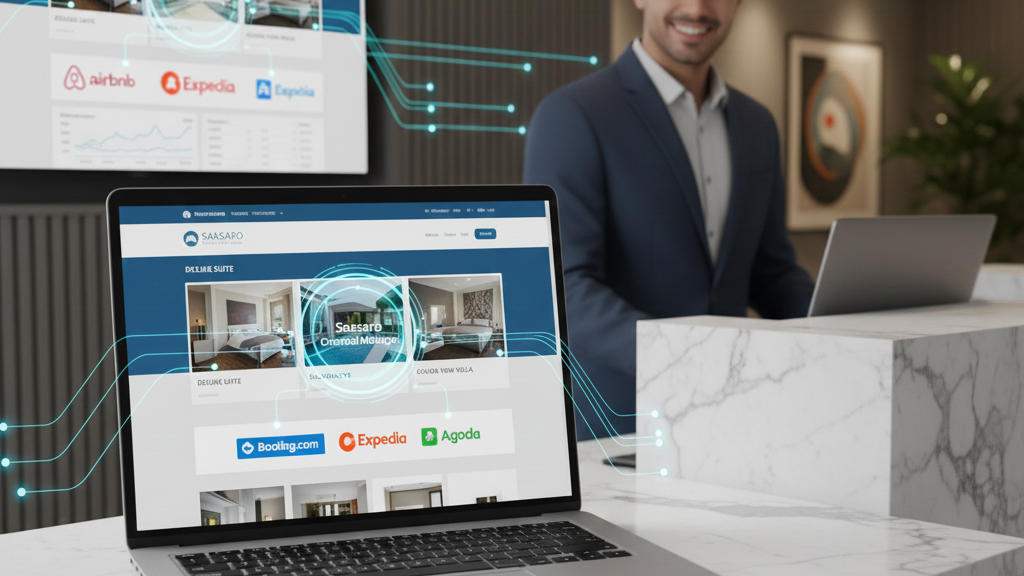
A hotel channel manager is software that allows hotels to manage room availability, rates, and restrictions across multiple booking channels from a single dashboard. Instead of logging into each OTA separately, hotels update information once, and the channel manager pushes those updates everywhere in real time.
At its core, a channel manager answers one critical question:
Are the right rooms, at the right price, available on the right channels at the right time?
Without a channel manager, hotels rely on manual updates, which increases the risk of errors, overbookings, and missed revenue opportunities.
Hotel Channel Manager vs PMS vs Booking Engine
These systems are often confused, but each serves a distinct purpose.
- PMS manages internal hotel operations like rooms, guests, billing, and housekeeping
- Booking engine captures direct bookings from the hotel website
- Channel manager distributes inventory and rates across external channels
The channel manager sits between the PMS and the distribution world. It ensures that what the hotel sells externally matches what it can deliver internally.
Why Hotels Need a Channel Manager
Preventing Overbookings
Overbookings damage guest trust and cost hotels time and money. A channel manager syncs availability across all channels instantly, reducing the risk of selling the same room twice.
Real-Time Rate and Inventory Updates
Rates change based on demand, season, and strategy. A channel manager ensures those changes are reflected everywhere without delay.
Saving Time and Operational Effort
Manually updating multiple OTAs consumes staff time and increases stress. A channel manager centralizes control.
Expanding Distribution Without Chaos
Hotels can add new channels confidently without increasing operational complexity.
How a Hotel Channel Manager Works
A channel manager connects the hotel’s PMS to multiple booking channels through secure integrations.
When:
- A room is booked on an OTA
- A rate is changed in the PMS
- Inventory is adjusted
The channel manager updates all connected channels automatically. This two-way communication keeps data aligned and reduces manual intervention.
Accuracy depends on correct setup. A channel manager is only as effective as the data flowing into it.
Key Functions of a Hotel Channel Manager
Inventory Management
The channel manager controls how many rooms are available on each channel and ensures inventory is updated in real time.
Rate Management
Hotels can update rates centrally and maintain rate parity or apply channel-specific strategies where appropriate.
Restrictions and Rules
Minimum length of stay, closed dates, stop-sell rules, and booking windows are managed centrally.
Multi-Channel Distribution
The channel manager connects hotels to OTAs, booking engines, and other distribution platforms.
Booking Confirmations
Bookings flow automatically into the PMS, reducing manual entry and errors.
Channels Managed by Hotel Channel Managers
Online Travel Agencies (OTAs)
OTAs like Booking.com, Expedia, and Agoda rely heavily on channel managers for real-time updates.
Hotel Website Booking Engine
Direct bookings are synchronized with OTA inventory to prevent conflicts.
Global Distribution Systems (GDS)
Corporate and travel agent bookings flow through GDS connections.
Metasearch Platforms
Pricing and availability for platforms like Google Hotel Ads are often managed through channel managers.
Corporate Booking Channels
Some hotels manage negotiated rates and allocations through channel manager integrations.
Hotel Channel Manager and OTAs
Managing Multiple OTAs From One Dashboard
A channel manager allows hotels to control all OTAs from a single interface, reducing complexity.
Rate Parity vs Rate Strategy
While many hotels aim for rate parity, channel managers also allow strategic differentiation when appropriate.
OTA Ranking and Availability Impact
Consistent availability improves OTA visibility. Frequent closed dates or errors can hurt ranking.
Reducing Dependency on a Single OTA
Channel managers enable balanced distribution, reducing reliance on any one platform.
Channel Manager vs Manual OTA Management
Risks of Manual Updates
Manual updates increase:
- Overbooking risk
- Rate inconsistencies
- Staff errors
Time and Error Costs
Staff time spent on manual updates could be used for guest service or revenue strategy.
Scalability Limitations
Manual management does not scale beyond a few channels.
Revenue Leakage
Missed updates often result in selling rooms at incorrect prices.
Channel Manager Integration With Hotel Systems
PMS Integration
The PMS is the source of truth. Inventory and bookings flow through it.
Booking Engine Integration
Direct bookings update availability instantly across OTAs.
Revenue Management System Integration
Dynamic pricing strategies rely on accurate channel manager data.
CRM and Guest Data Flow
While channel managers focus on distribution, booking data feeds into CRM systems for guest relationship management.
How Channel Managers Improve Hotel Revenue
Maximizing Inventory Exposure
Hotels can confidently open inventory across multiple channels.
Supporting Dynamic Pricing
Rates can be adjusted frequently without operational overload.
Reducing Overbooking Losses
Fewer errors mean fewer guest relocations and compensation costs.
Improving Occupancy Without Discounting
Better distribution strategy often improves occupancy without lowering prices.
Choosing the Right Hotel Channel Manager
Hotel Size and Complexity
Small hotels need simplicity. Large hotels need scalability and control.
Number of Channels Required
More channels increase complexity. Choose quality over quantity.
Integration Requirements
Ensure compatibility with existing PMS and booking engine.
Pricing Models
Understand setup fees, monthly charges, and commission structures.
Support and Reliability
Channel managers are mission-critical. Support quality matters more than features.
Channel Managers for Different Hotel Types
Small Independent Hotels
Ease of use and reliability are priorities.
Boutique Hotels
Flexibility and selective channel strategies work best.
Luxury Hotels
Control over rate integrity and brand positioning is critical.
Multi-Property Groups
Centralized dashboards and reporting become essential.
Common Hotel Channel Manager Mistakes
- Connecting too many channels
- Ignoring channel performance
- Poor initial setup
- Not auditing rates regularly
- Treating channel managers as “set and forget” tools
Channel managers require strategy, not autopilot.
Channel Manager Setup and Best Practices
Initial Setup Checklist
- Clean inventory data
- Clear rate structure
- Defined restrictions
- Test bookings
Channel Prioritization
Focus on channels that deliver profitable bookings.
Inventory Allocation Strategy
Control exposure during high-demand periods.
Monitoring and Audits
Regular audits prevent silent revenue leaks.
Measuring Channel Manager Performance
Hotels should track:
- Channel-wise revenue
- Booking pace
- Overbooking incidents
- Occupancy and ADR impact
- Cancellation patterns
Data-driven decisions outperform intuition.
Future Trends in Hotel Channel Management
AI-Driven Distribution Decisions
Smart systems will recommend optimal channel allocation.
Direct Booking Prioritization
Hotels will increasingly use channel managers to protect direct sales.
Smarter Inventory Allocation
Demand-based exposure will become standard.
Unified Commerce Platforms
Channel management will merge with pricing and marketing intelligence.
Frequently Asked Questions – Hotel Channel Manager
What is a hotel channel manager?
A system that manages inventory and rates across multiple booking channels.
Do small hotels need a channel manager?
Yes. Even small hotels benefit from reduced errors and saved time.
Is a channel manager different from a PMS?
Yes. PMS manages operations. Channel manager manages distribution.
Can a channel manager reduce OTA commissions?
Indirectly, yes, by supporting better direct booking strategy.
A hotel channel manager is not just software. It is a safeguard against chaos in a complex distribution environment. Hotels that use channel managers strategically gain control, visibility, and confidence in how their rooms are sold.
The real value of a channel manager lies not in how many channels it connects, but in how well it supports pricing strategy, inventory control, and revenue goals. When used thoughtfully, it becomes one of the most powerful tools in a hotel’s revenue ecosystem.