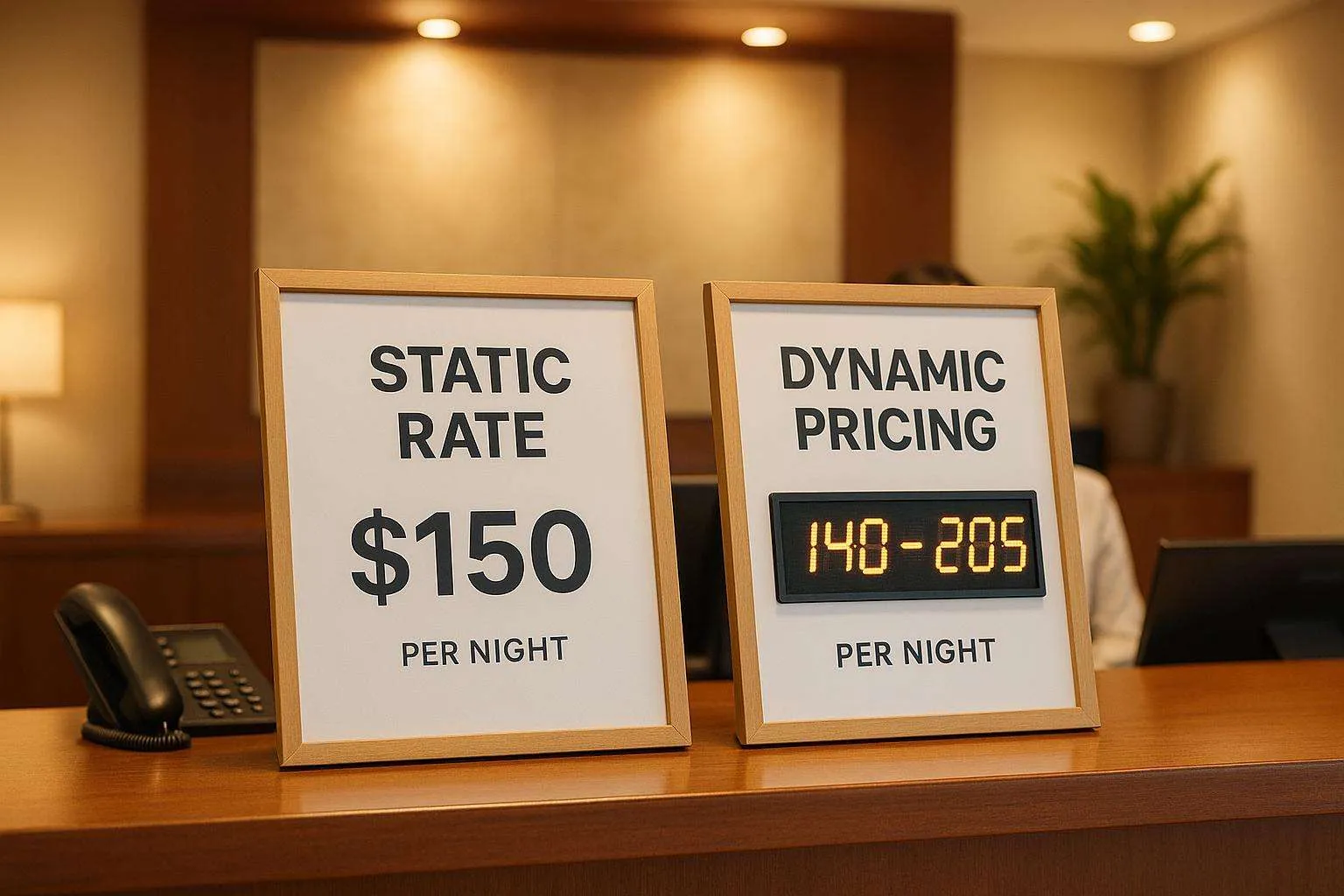
Hotel pricing used to be simple. Rates were set seasonally, adjusted a few times a year, and rarely questioned unless occupancy collapsed. That world no longer exists. Today’s hotel market is fluid, competitive, and hyper-transparent. Guests compare prices across multiple platforms in seconds. Demand rises and falls faster than ever. Fixed pricing struggles to keep up.
- What Is Hotel Dynamic Pricing?
- Dynamic Pricing vs Static Pricing
- Why Dynamic Pricing Is Essential for Modern Hotels
- Core Principles of Hotel Dynamic Pricing
- Key Factors That Influence Hotel Dynamic Pricing
- Dynamic Pricing vs Discounting
- Hotel Dynamic Pricing Strategies
- Implementing Dynamic Pricing Step by Step
- Dynamic Pricing Across Distribution Channels
- Dynamic Pricing for Different Hotel Types
- Technology and Tools for Hotel Dynamic Pricing
- Common Hotel Dynamic Pricing Mistakes
- Measuring the Success of Dynamic Pricing
- Advanced Dynamic Pricing Techniques
- Frequently Asked Questions About Hotel Dynamic Pricing
- Conclusion
Hotel dynamic pricing is the answer to this reality. It allows hotels to adjust room rates in response to real-time demand signals instead of relying on assumptions or fear-based discounts. When applied correctly, dynamic pricing increases revenue, protects brand value, and creates pricing confidence. When misunderstood, it turns into chaotic rate changes that confuse guests and staff alike.
This guide explains hotel dynamic pricing in a practical, hotel-first way. It shows what dynamic pricing really is, how it differs from discounting, which factors influence it, and how hotels of all sizes can implement it without expensive software or complex formulas.
What Is Hotel Dynamic Pricing?
Hotel dynamic pricing is the practice of adjusting room rates based on changing demand, booking behavior, market conditions, and inventory availability. Prices are not fixed. They move in response to real-world signals.
In simple terms, dynamic pricing means charging different prices for the same room on different days, depending on how likely it is to sell. A room may be priced higher during a busy weekend and lower during a quiet weekday. The room itself does not change. Demand does.
Dynamic pricing is not random pricing. It is structured, rule-based, and data-informed. Hotels that apply it well increase revenue without damaging guest trust.
Dynamic Pricing vs Static Pricing
Static pricing relies on predetermined rates that change infrequently. Hotels using static pricing often miss revenue opportunities during high-demand periods and over-discount during low-demand periods.
Dynamic pricing adjusts rates continuously based on demand signals. Instead of reacting late, hotels anticipate demand shifts and price accordingly.
Static pricing asks, “What should this room cost?”
Dynamic pricing asks, “What is this room worth today?”
That difference matters.
Why Dynamic Pricing Is Essential for Modern Hotels
Maximizing Revenue During High Demand
High-demand dates are the biggest revenue opportunity. Hotels using static pricing often sell out too early at low rates, leaving money on the table. Dynamic pricing allows rates to rise as demand increases, maximizing revenue from limited inventory.
Protecting Rates During Low Demand
When demand drops, many hotels panic and slash prices across the board. Dynamic pricing offers a smarter approach. Instead of blanket discounts, rates are adjusted carefully based on pickup, remaining inventory, and booking windows.
Reducing Over-Discounting
Discounting trains guests to wait for deals and damages long-term pricing power. Dynamic pricing replaces discount reflexes with measured adjustments that protect brand value.
Improving Forecast Accuracy
When pricing reflects demand realistically, forecasting becomes more accurate. Hotels can plan staffing, inventory, and promotions with greater confidence.
Core Principles of Hotel Dynamic Pricing
Dynamic pricing is guided by a few core principles. Ignoring these turns pricing into guesswork.
Demand-Based Pricing
Rates should respond to actual demand signals such as search volume, booking pace, and remaining availability. Demand, not fear, drives price movement.
Inventory-Driven Pricing
As rooms sell, remaining inventory becomes more valuable. Rates should rise as availability decreases, especially close to arrival.
Time-Based Pricing
Booking behavior changes over time. Early bookers behave differently from last-minute guests. Pricing should reflect booking windows.
Channel-Sensitive Pricing
Each distribution channel has a cost. Dynamic pricing considers net revenue, not just headline rates.
Key Factors That Influence Hotel Dynamic Pricing
Demand and Booking Pace
Pickup pace shows how fast rooms are selling compared to previous periods. Faster pickup usually justifies higher rates. Slower pickup signals caution, not immediate discounting.
Seasonality and Day-of-Week Trends
Weekends, holidays, and peak seasons naturally support higher rates. Weekdays and shoulder seasons require more nuanced pricing.
Competitor Pricing
Competitor rates provide context, not commands. Blindly matching competitors often leads to price wars. Dynamic pricing uses competitor data as a reference, not a rule.
Events, Holidays, and Local Demand Drivers
Concerts, conferences, festivals, and public holidays can dramatically increase demand. Pricing must reflect these spikes early, not after rooms start selling fast.
Remaining Inventory
As inventory decreases, price sensitivity often drops. Guests booking late are usually more motivated and less price-sensitive.
Cancellation and No-Show Patterns
High cancellation rates justify cautious overbooking and pricing adjustments. Understanding cancellation behavior improves confidence in rate decisions.
Dynamic Pricing vs Discounting
Discounting reduces value perception. Dynamic pricing adjusts value perception.
Why Discounting Hurts Long-Term Revenue
Discounting attracts price-sensitive guests who cancel more, complain more, and return less. It also damages brand positioning.
Using Price Increases Instead of Discounts
When demand rises, prices should rise too. Many hotels hesitate to increase rates out of fear. Dynamic pricing replaces fear with evidence.
Value-Based Adjustments Instead of Rate Cuts
Adding value, such as breakfast or flexibility, often converts better than cutting rates. Dynamic pricing supports this approach.
Hotel Dynamic Pricing Strategies
BAR-Based Dynamic Pricing
The Best Available Rate acts as the anchor. Dynamic pricing adjusts BAR upward or downward based on demand signals while maintaining structure.
Length of Stay Pricing
Minimum length of stay requirements during peak periods protect inventory for higher-value bookings.
Advance Purchase Pricing
Early bookers are rewarded with slightly lower rates, improving forecast visibility. As arrival approaches, rates adjust upward.
Last-Minute Pricing
Last-minute demand is often inelastic. Hotels should avoid deep discounts close to arrival unless inventory pressure is extreme.
Peak vs Off-Peak Pricing
Peak periods should be protected aggressively. Off-peak periods require careful stimulation, not desperation.
Implementing Dynamic Pricing Step by Step
Dynamic pricing does not require expensive software to begin.
Set a Pricing Floor and Ceiling
Define minimum acceptable rates based on costs and brand positioning. Define maximum rates based on market tolerance.
Create Demand-Based Rate Rules
Establish clear rules such as increasing rates when occupancy crosses certain thresholds or when pickup exceeds historical pace.
Monitor Pickup and Pace Regularly
Daily monitoring allows proactive adjustments. Waiting too long leads to missed opportunities.
Adjust Prices Proactively
Dynamic pricing rewards anticipation. Small early adjustments outperform large late changes.
Dynamic Pricing Across Distribution Channels
OTA Pricing Considerations
OTAs amplify pricing mistakes quickly. Consistency and clarity matter. Sudden deep discounts can hurt ranking and perception.
Direct Booking Dynamic Pricing
Direct channels allow more flexibility. Value-added incentives work better than undercutting rates.
Maintaining Rate Integrity
Dynamic pricing should never feel erratic to guests. Rate changes must follow logical patterns.
Dynamic Pricing for Different Hotel Types
Boutique Hotels
Boutique hotels benefit from demand-led pricing combined with strong branding. Avoid aggressive discounting that dilutes uniqueness.
Budget Hotels
Dynamic pricing helps protect thin margins. Volume matters, but pricing discipline matters more.
Luxury Hotels
Luxury pricing should move subtly. Fewer but smarter adjustments preserve exclusivity.
Independent Hotels
Independent hotels gain the most from dynamic pricing because they lack brand-driven demand.
Technology and Tools for Hotel Dynamic Pricing
Property Management Systems
PMS data provides occupancy, ADR, and booking trends essential for pricing decisions.
Revenue Management Systems
RMS tools automate analysis and recommendations. They support, not replace, strategic thinking.
Channel Managers
Channel managers ensure consistent updates across platforms.
Manual vs Automated Pricing
Manual dynamic pricing works for smaller hotels with discipline. Automation helps scale but requires oversight.
Common Hotel Dynamic Pricing Mistakes
Reacting too late, copying competitors blindly, changing prices too frequently, and ignoring guest perception are common errors.
Another mistake is confusing dynamic pricing with constant price fluctuation. Stability with flexibility is the goal.
Measuring the Success of Dynamic Pricing
Success should be measured through:
- ADR growth
- RevPAR improvement
- Balanced occupancy
- Net revenue increase
Short-term dips are normal. Long-term trends matter.
Advanced Dynamic Pricing Techniques
Predictive models, personalized pricing based on guest behavior, and AI-driven forecasts are shaping the future. These tools enhance decision-making but do not replace fundamentals.
Frequently Asked Questions About Hotel Dynamic Pricing
What is hotel dynamic pricing?
It is adjusting hotel room rates based on demand, timing, and market conditions.
How often should hotels change prices?
As often as demand signals change, but with structure and consistency.
Is dynamic pricing good for small hotels?
Yes. Discipline matters more than technology.
Does dynamic pricing upset guests?
Only when done inconsistently. Transparent value builds trust.
Conclusion
Hotel dynamic pricing is not about chasing the market. It is about understanding it. Hotels that apply dynamic pricing thoughtfully move from reactive discounting to proactive revenue control.
Pricing should tell a story of confidence, not panic. With the right rules, monitoring, and mindset, dynamic pricing becomes one of the most powerful tools a hotel can use to increase profitability without compromising guest trust.