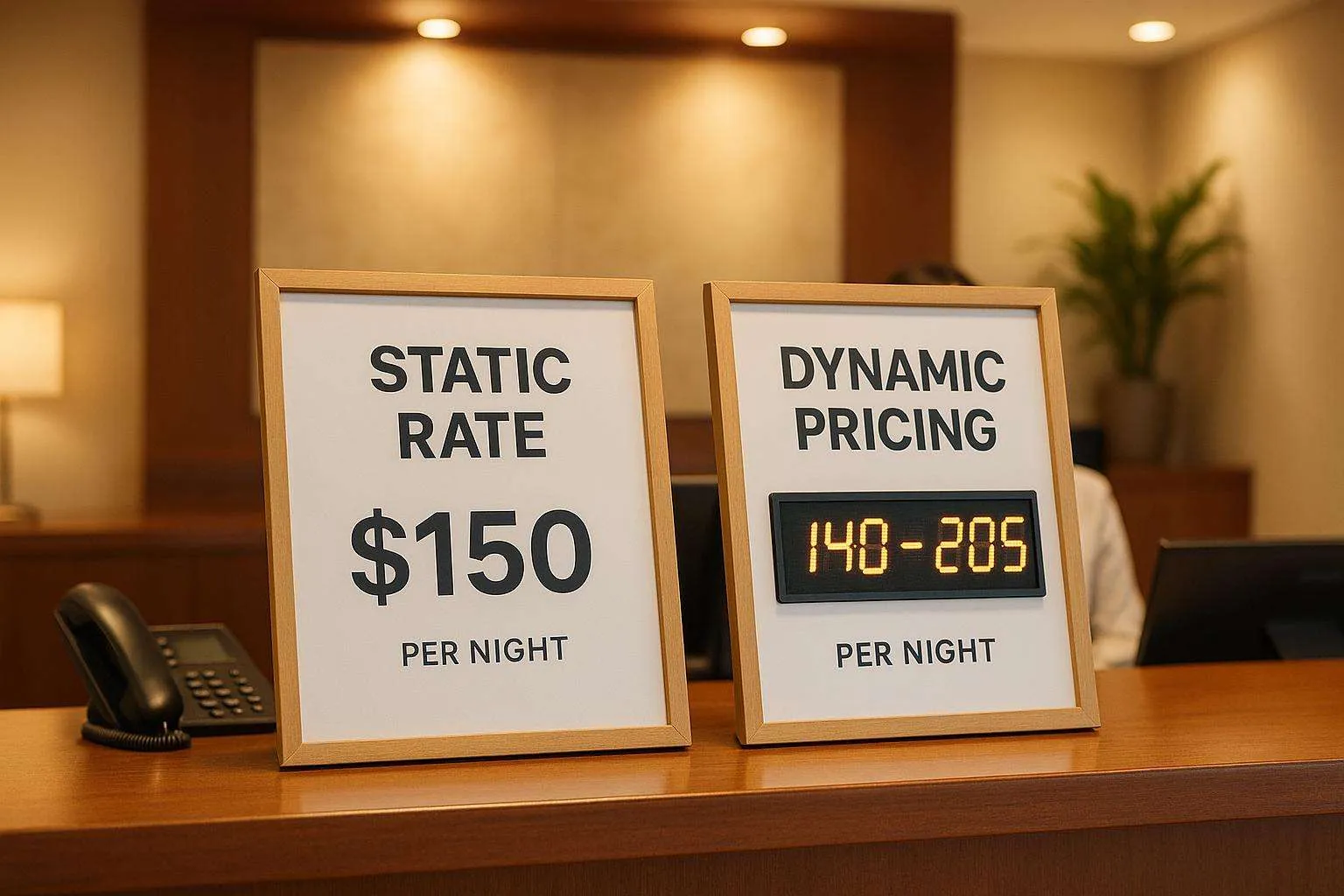
Hotel revenue management is no longer a concept reserved for large chains with complex systems and dedicated analysts. In today’s competitive hospitality environment, every hotel, whether boutique, budget, luxury, or independent, must actively manage revenue to survive and grow. Rising operational costs, fluctuating demand, and increasing OTA commissions have made traditional fixed pricing models ineffective.
- What Is Hotel Revenue Management?
- Revenue Management vs Yield Management
- Why Hotel Revenue Management Is Critical Today
- Core Principles of Hotel Revenue Management
- Understanding Hotel Demand and Market Segmentation
- Hotel Pricing Strategies
- Distribution and Channel Management
- Forecasting and Budgeting in Revenue Management
- Inventory and Availability Management
- Revenue Management for Different Hotel Types
- Technology and Tools for Hotel Revenue Management
- Role of Revenue Manager and Leadership
- Common Hotel Revenue Management Mistakes
- Measuring Revenue Management Success
- Future Trends in Hotel Revenue Management
- Frequently Asked Questions About Hotel Revenue Management
Revenue management is not about charging the highest price possible. It is about charging the right price, to the right guest, through the right channel, at the right time. Hotels that understand and apply this philosophy consistently outperform those that rely on discounts, intuition, or last-minute reactions.
This guide explains hotel revenue management in a practical, structured, and easy-to-apply way. It breaks down concepts, strategies, tools, and mistakes so that hotel owners and managers can move from reactive pricing to controlled profitability.
What Is Hotel Revenue Management?
Hotel revenue management is the strategic process of analyzing demand, forecasting booking patterns, and adjusting prices, availability, and distribution channels to maximize total revenue and profitability from a fixed inventory of rooms.
A hotel cannot create more rooms for a busy night or store unsold rooms for the next day. Once a night passes, any unsold room becomes lost revenue forever. Revenue management exists to prevent that loss by aligning price and demand intelligently.
At its core, revenue management answers three questions:
- How much demand exists for a given date?
- Who is most likely to book at each price point?
- How should rooms be priced and distributed to maximize revenue?
Revenue management is both analytical and strategic. It combines data with disciplined decision-making.
Revenue Management vs Yield Management
Yield management focuses primarily on maximizing revenue per room by adjusting prices. Revenue management goes further. It considers not only price, but also channel cost, guest value, length of stay, cancellation risk, and long-term profitability.
For example, two bookings at the same rate may generate very different profit if one comes through a high-commission OTA and the other comes directly. Revenue management accounts for this difference.
Yield is about price optimization. Revenue management is about total revenue optimization.
Why Hotel Revenue Management Is Critical Today
Maximizing Revenue From the Same Inventory
Hotels sell a fixed product. Revenue growth rarely comes from more rooms. It comes from better utilization of existing rooms. Revenue management helps hotels earn more from the same inventory by improving pricing accuracy and demand matching.
Reducing Dependency on Discounts
Many hotels discount when occupancy drops, assuming lower prices will automatically increase demand. In reality, discounting often attracts price-sensitive guests who cancel easily, complain more, and rarely return.
Revenue management replaces blanket discounting with targeted pricing strategies that protect value.
Improving Forecasting and Stability
Hotels without revenue management react late. Hotels with revenue management anticipate changes. Forecasting allows hotels to prepare pricing, staffing, and inventory decisions in advance, reducing panic and errors.
Protecting Profit Margins
Revenue without profit is meaningless. Revenue management considers costs, commissions, and cancellation behavior to protect margins, not just topline revenue.
Core Principles of Hotel Revenue Management
Every revenue decision should align with five core principles.
Right Room
Not all rooms are equal. Suites, views, and premium categories should be protected during high demand periods.
Right Guest
Different guests have different values. Corporate guests, long-stay guests, and repeat direct guests often deliver higher lifetime value than one-time discounted bookings.
Right Price
Pricing should reflect demand, not fear. Rates must change based on booking pace, seasonality, and market conditions.
Right Channel
Each channel has a cost. Revenue management prioritizes lower-cost channels when demand allows and uses OTAs strategically when visibility is needed.
Right Time
Timing matters. Early bookings, last-minute demand, and length of stay all influence pricing decisions.
Understanding Hotel Demand and Market Segmentation
Identifying Demand Patterns
Demand varies by:
- Weekday vs weekend
- Season vs off-season
- Events, holidays, and local demand drivers
Revenue management begins with understanding when demand naturally exists and when it must be stimulated.
Hotel Market Segmentation
Hotels typically serve multiple segments:
- Corporate
- Leisure
- Groups
- OTA transient
- Direct transient
Each segment behaves differently in terms of booking window, price sensitivity, and cancellation risk. Revenue management adjusts strategy per segment rather than treating all bookings equally.
Hotel Pricing Strategies
Dynamic Pricing Explained
Dynamic pricing adjusts rates based on real-time demand indicators such as pickup pace, remaining inventory, competitor pricing, and historical data.
Static pricing ignores market signals. Dynamic pricing responds to them.
BAR (Best Available Rate) Strategy
BAR acts as the public reference price. Discounts, promotions, and corporate rates should logically flow from BAR, not undercut it randomly.
A disciplined BAR strategy maintains price integrity across channels.
Discounting vs Value-Based Pricing
Discounting reduces perceived value. Value-based pricing adds inclusions such as breakfast, flexibility, or experiences while protecting headline rates.
Guests remember value, not percentages off.
Psychological Pricing
Small pricing differences influence perception. Prices ending slightly below round numbers or positioned against higher alternatives can improve conversion without lowering value.
Distribution and Channel Management
OTA vs Direct Channel Economics
OTAs bring visibility but charge commissions. Direct bookings cost less and build relationships. Revenue management balances both.
OTAs are acquisition channels. Direct bookings are profit channels.
Channel Cost Analysis
Every booking has a cost. Revenue management tracks net revenue after commission, payment fees, and operational impact.
Higher gross revenue does not always mean higher profit.
Rate Parity and Revenue Impact
Rate parity protects trust and ranking. Inconsistent pricing reduces conversion and damages credibility.
Channel Mix Optimization
During high demand, prioritize direct and low-cost channels. During low demand, expand distribution strategically.
Forecasting and Budgeting in Revenue Management
Demand Forecasting Basics
Forecasting uses historical data, current pickup, and market intelligence to predict future demand.
Accurate forecasts allow confident pricing decisions.
Pickup and Pace Reports
Pickup shows how many rooms are booked over time. Pace compares current booking speed with previous periods.
These reports reveal whether demand is stronger or weaker than expected.
Budget vs Actual Tracking
Regular comparison of forecasted revenue versus actual performance helps refine strategy and assumptions.
Inventory and Availability Management
Room Type Control
Not all room types should be sold at the same pace. Premium rooms should be protected until base categories sell.
Length of Stay (LOS) Strategies
Minimum length of stay restrictions during peak periods prevent short stays from blocking higher-value bookings.
Overbooking Strategies
Controlled overbooking accounts for cancellations and no-shows. Ethical overbooking improves occupancy without harming guest experience.
Revenue Management for Different Hotel Types
Boutique Hotels
Boutique hotels rely on uniqueness and experience. Revenue management should protect brand value and avoid aggressive discounting.
Budget Hotels
Volume matters, but margin still counts. Clear segmentation and cost control are essential.
Luxury Hotels
Luxury revenue management focuses on exclusivity, personalization, and experience pricing rather than heavy rate fluctuation.
Independent Hotels
Independent hotels benefit most from disciplined revenue management because they lack brand-driven demand.
Technology and Tools for Hotel Revenue Management
Property Management Systems
PMS data provides occupancy, ADR, and booking trends.
Revenue Management Systems
RMS tools analyze large datasets and recommend pricing. While helpful, they require human oversight.
Channel Managers
Channel managers ensure rate and inventory consistency across platforms.
Technology supports revenue management, but strategy still requires human judgment.
Role of Revenue Manager and Leadership
Responsibilities of a Revenue Manager
Revenue managers analyze data, set pricing strategies, monitor performance, and collaborate with sales and marketing.
Cross-Department Collaboration
Revenue management works best when marketing, sales, front office, and operations align. Pricing decisions affect service delivery and guest satisfaction.
Building a Revenue-Driven Culture
Revenue management should be a mindset across the hotel, not a siloed function.
Common Hotel Revenue Management Mistakes
Over-discounting, static pricing, ignoring channel costs, relying on gut feeling, and reacting too late are common mistakes.
Another major error is focusing only on occupancy instead of profitability.
Measuring Revenue Management Success
Key metrics include:
- ADR (Average Daily Rate)
- RevPAR (Revenue per Available Room)
- GOPPAR (Gross Operating Profit per Available Room)
Tracking trends over time matters more than daily fluctuations.
Future Trends in Hotel Revenue Management
AI-driven forecasting, total revenue management beyond rooms, and personalized pricing based on guest behavior are shaping the future.
Hotels that adopt these trends early gain competitive advantage.
Frequently Asked Questions About Hotel Revenue Management
What is hotel revenue management?
It is the strategic process of optimizing pricing, demand, and distribution to maximize hotel profitability.
Why is revenue management important for hotels?
Because it improves revenue, protects margins, and reduces dependency on discounts.
Can small hotels do revenue management without software?
Yes. Discipline, data tracking, and basic forecasting are more important than tools.
What is the biggest revenue management mistake?
Over-discounting without understanding demand or channel cost.
Hotel revenue management is not about complexity. It is about clarity, discipline, and consistency. Hotels that apply revenue management principles thoughtfully gain control over pricing, improve profitability, and reduce stress during low-demand periods.
In an industry where rooms expire every night, revenue management is not optional. It is the difference between surviving and thriving.